Showing posts with label Colonial NHP. Show all posts

Tuesday, August 6, 2019

2019 Commemorative Presidential Visit

On July 30th, 2019, I had the opportunity to assist in protecting the President of the United States and Virginia legislative dignitaries. President Trump visited Jamestown, Virginia to give a speech regarding the 400th anniversary of the representative government in the United States of America. Legislative dignitaries of Virginia came to Jamestown Island to hold a general assembly meeting inside of Colonial Historical National Park’s “Jamestown Church” which is historically known for one of the oldest remnants of Colonial America. Many historical events took place in Jamestown Church including the marriage of Pocahontas and John Rolfe.

Ranger Bussell, Colonial National Historical Park 


Protecting legislative dignitaries did not only require National Park Service law enforcement, but many other law enforcement departments such as the United States Secret Service, Department of Homeland Security, United States Park Police, Virginia Capitol Police, Virginia State Police, Virginia Marine Police, Norfolk City Police, and James City County Police. Despite the many idiosyncrasies that each department holds, it was amazing to witness and participate in all of the departments involved working together for one goal. I was able to network and seek career advice with various employees in the National Park Service from all different parts of the United States. 

I gained familiarization on Incident Action Plan (IAP), Emergency Response Team (ERT), and physical security operations. As I close out my week with Colonial Historical National Park, I am fortunate to shadow under Park Rangers who gave me as much experience and knowledge as possible so that I can be best prepared for SLETP. I will forever be thankful for this experience. 

Friday, July 19, 2019

Holy Waspamoli

For the last four weeks of my internship, I will be alongside law enforcement which is beneficial for me because of the fact that this is my aspiring career path. 

Around this time of the season, the wasp population is growing expeditiously due to the amount of larvae hatching from their nests. This becomes a problem because of nests that are located around where park visitors frequent which result in visitors getting stung or possibly hospitalized. Our solution to this? WASP SPRAY.
Paper Wasp Nest 

I was sent on a mission to locate and perform preventative maintenance on cannon carriages which potentially houses wasp nests. Preventative maintenance consists of cleaning, patching, repainting, and preventing the possibility of wasp nests hatching on our property.  

Preventative Maintenance, French Encampment

Although I did get chased a way a plethora of times, I was fortunate enough to avoid wasp stings! I am thankful for wasp spray and it’s creators. 

Sunday, July 14, 2019

The Opposite of ARACHNOPHOBIA!

My week started as a beautiful Monday morning. I was able to shadow the administration division for my eighth week at Colonial Historical National Park. During the start of the week, I attended a safety assessment meeting which was relevant to me because I am the public safety writer for Lincoln University’s Department of Public Safety. I was educated on development plans such as the hazard communications plan, the thermal extreme plan, and proper personal protective equipment. These plans are things that I will be bringing to awareness for Lincoln University's police department. The superintendent of Colonial Historical National Park deserves an honorable mention; She made such a presence in the meeting, it was quite admirable. Her words taught me that it is okay to be unsatisfied with statistics in a meeting, and it is okay to voice one's opinions and thought processes relevant to the issue or topic that is being discussed. 
Wearing Administration Gear Gifted by the VC, Jamestown Island

Another significant part of my week was learning about retirement plans that are offered with the National Park Service. I am now able to depict and articulate the three tier retirement program. I have never been more excited to start saving for retirement, and will do so using the TSP, and FERS. 


For the closing of my week, I met with the volunteer coordinator of COLO and began the process of helping to clean out historic horse stables. As one may know, I enjoy hands on work, so using a heavy duty vacuum and a fuel powered leaf blower acted as an amusement park for me! By cleaning out the sheds, I discovered a plethora of species of arachnids. In fact, when I used the leaf blower,  spiders blew everywhere including ON ME. I developed a new found desensitization for spiders (think the opposite of arachnophobia). 
Using a leaf blower, Wisteria Cottage 

Sunday, July 7, 2019

A Fourth of July to Remember!


When July fourth hits, thousands of people come into the village of Historical Yorktown to watch the fireworks over Yorktown Beach. From that, several departments from local counties and a few Law Enforcement Rangers from close proximity parks come to assist in patrolling Historic Yorktown and parts of Colonial Parkway to ensure the safety of events and people in the area.

Before the events in Yorktown started, I was able to tour two command centers that consisted of chiefs and commanding officers from various departments in the area. After the tour, all of the rangers had a briefing that explained the IAP (Incident Action Plan) which consisted of an itinerary for the special events that took place that evening and the specific tasks and duties for every Law Enforcement Ranger.

After our meeting, all of the Law Enforcement Rangers headed to their posts. My supervisor and I collected traffic cones and barricades in order to control the flow of traffic coming out of Yorktown after the infamous fireworks. We directed traffic at four entrances and exits using our barricades, cones and patrol car strategically so that the flow of traffic would stay consistent.

I benefited from this experience because I received knowledge first hand of what to expect when a large event takes place in the park that I will be apart of. I also gained insight of what it is like to work with other police departments and how important good rapport is with local counties.

Monday, July 1, 2019

“326-Tango, Rolling Traffic.”

Due to the warm summer weather that Virginia is blessed with during June, Colonial National Historical Park receives an influx of visitors, which means that the traffic population on the Colonial Parkway expands by large amounts. This week consisted of traffic stop field days, which really got me comfortable with using the radio to call for dispatch.
Tour Road, Colonial National Historical Park


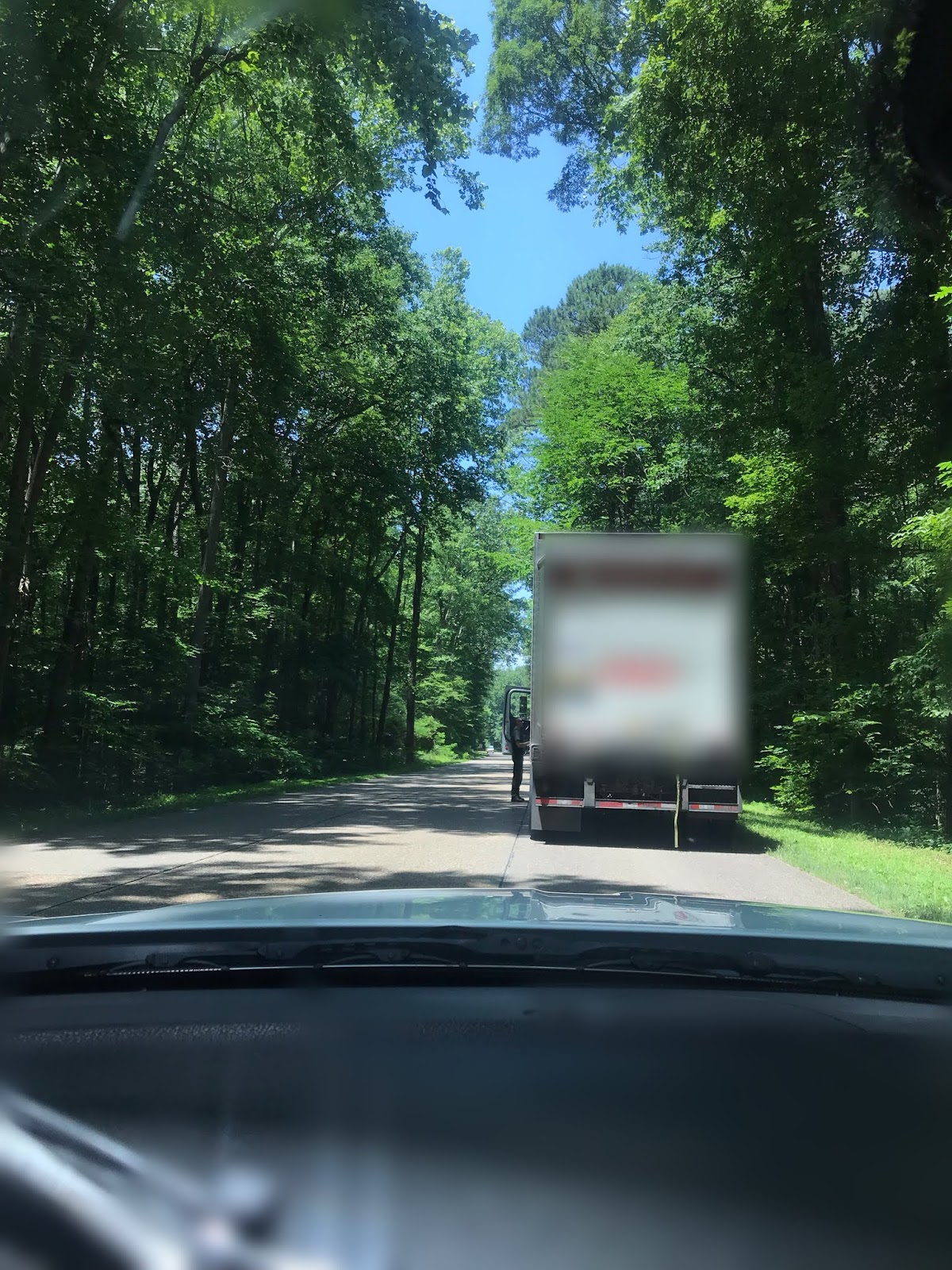
Commercial vehicles are prohibited on the Colonial Parkway, which is a 23 mile stretch of tour road filled with informational pull-outs that connects the history and locations of historic Jamestown Island and the Yorktown Battlefield. However due to its convenient location and frequent exit points, commercial vehicles and commuting vehicles take the Colonial Parkway as a means of a shortcut to get wherever their destination is. This large influx of traffic results in endless speeders and commercial vehicle violations.
Traffic Stop on Colonial Parkway, Colonial National Historical Park


From this, I am fortunate enough to memorize the phonetic alphabet, dispatch radio communications, and the basic functions of IMARS, which is a database for violation notices and written warnings for the National Park Service.

Monday, June 24, 2019

Tirzah “The Locksmith” Terry

   For the start of the week I met with a Resource Management Specialist named Top. My assignment this week was to shadow the facilities management
division and discuss how Park projects are created and managed, the process of filling out work order forms, and the process of compliance.

    One of my hobbies outside of work and school is tradework. I have helped many friends of mine renovate their houses, so I was delighted when I found out that we were going to inspect houses, perform condition assessments, and match blueprints with cannons and carriages. Another highlight of my week was building a key core. Acting as a metal receptor to a key, I received first hand insight on the roles of the different types of keys used for one lock. One can now call me: Tirzah “The Locksmith” Terry

Making a key core for a COLO door, Yorktown Maintenance 

Foundation assessment in a basement crawl space, Werowocomoco VA

Matching blueprints with cannons, Yorktown Maintenance 

    My week ended with all of the full time maintenance employees working together to place a rehabilitated cannon and carriage back in the historic Yorktown battlefield.

Saturday, June 8, 2019

Beautiful Present, Problematic Past

This week I had the opportunity to work in the interpretation division. Interpretation is about building intellectual and emotional synapses between Colonial Historical National Park visitors and the parks significance. I was fortunate enough to work in both the Yorktown Battlefield where part of the Revolutionary War  took place, and Historic Jamestown where the very first permanent settlement built a fort.

My first task was to drive the tour roads in the park and learn about the 12 events that lead up to America’s triumphant win. There are 16 miles of tour roads that are separated into 3 driving loops. I was also fortunate enough to view the parks gallery which displayed artifacts such as buttons and guns that were excavated from the battlefield. There was also a verbal tour from one of our park rangers who told us a detailed manifesto of the strategies and thought processes of the British, the French, and the English. After those events, I was able to help out at the front desk and give park visitors the itinerary of events for the day, and provide directions to certain sites. I met a lot of amazing people from all parts of the country.


Original Earthwork, Yorktown Battlefield


After I learned about Yorktown Battlefield, I traveled to Jamestown Island in goals to gain information about the historic events that had taken place. In return, I was able to give information about the events going on inside the park. My first task at Historic Jamestown was to tour the island that featured landmarks that provided information about the natural landscape and plants in the area. Jamestown had the most beautiful landscape, however it had the most darkest past.

Jamestown was ridden of slavery and starvation, and the historic fort that was built by Capitan John Smith would only last a short amount of time due to the lack of food and fresh water. From 1609-1610, 75% of the population perished from malnourishment, in fact, Jamestown settlement was the earliest record of human cannibalism to this day. When the colonists finally found a consistent resource to make money off of, which was tobacco, the slave trade into Jamestown began. It is still not recorded how many slaves were brought into the fort, however the archeologists at Jamestown are actively finding slaves as I am telling this story. Additionally, many of the streets in Yorktown were named after members of the English Royal Africa Company, which was a slave trade company that played a significant role in the selling of Africans in Jamestown.


Salty Swamp, Jamestown Island


Despite its rough past, Historic Jamestown Island and Yorktown Battlefield remain a beautiful place of earthworks, greenery, and wildlife.

Friday, May 31, 2019

Discovery, Preservation, and Explosives!

Discovering
Tuesday I spent with an Managerial Archeologist named Dwayne. In the morning, he showed me photos of archeological sites in Historical Jamestown Island and introduced me to the challenge of erosion that Colonial Historical National Park is facing. Succeeding the lesson, I gained a deeper understand of global warming and it’s direct impact on Jamestown Island. Water tends to expand when it warms. Subsequently as the sun is warming the Earth, the water levels begin to rise because it takes up more space in volumes. During the afternoon, we took a ride westbound to Jamestown Island to see some of the behind the scene archeological excavation on the “Angela” Exhibit. “Angela” was one of the first documented African slaves to come to America from Angola in 1619. The reason why I put the name “Angela” in abbreviations is because Angela was not her real name, but was the name that her slave master assigned to her.

Sea Wall, Jamestown Island 

Preserving
On Thursday, I was fortunate enough to see the other side of archeological work: Preservation. After an artifact is discovered, time effort and money is poured into the object in goals to preserve the item for as long as possible. I helped an archivist begin inventory of the thousands of artifacts discovered in Jamestown, Yorktown and Williamsburg. Some of the artifacts were used in the Revolutionary War. Unfortunately I was unable to take pictures of these artifacts because they are protected from the public, unless on display.

French Cannon Used in the Revolutionary War, NPS Warehouse 


Washed-Up Phosphate Can
On my last day of Week 2, Ranger Bussell and I received a call about a phosphorus can that washed up on a shorelin. Turns out it was a hazardous can of red phosphorus (used as SOS flares in Naval vessels.) I was adventurous enough to get close for a picture. This investigation involved the Navy Bomb Squad, Fire Marshall, and the National Park Service.
Phosphate Naval Vessel, Naval Weapons Station

A Refreshing Start

A Refreshing Start
A day after leadership camp I headed to Philadelphia International Airport and soon after I arrived in Newport News, Virginia. I met my supervisor at the airport and he was so easygoing and friendly! We clicked right away as we began to drive down the beautiful historical tour roads of Colonial Historical National Park.
Bald Eagle, Wormley Pond, Yorktown Battlefield

My supervisor worked first shift that week, which started by opening all of the historical tour road gates at sunrise. While doing so, we were fortunate enough to spot box turtles sunbathing in Beaver Dam, colorful domesticated ducks roaming the fields of Surrender Road, and bald eagles perching by creeks looking for their next meal. After our refreshing peaceful morning, law enforcement took the lead while driving down the 23 mile Colonial Parkway. I had the opportunity to call on the radio, and respond to dispatch for the first time. I learned fairly quickly the phonetic alphabet and basic communications within the park. In between our traffic stops, I was fortunate enough to get introduced to various park divisions and discuss their meticulous inter workings. Everyone was so welcoming and friendly and I gained access to a lot of information.

Complimentary CPR Training
On my third day working, my supervisor offered a CPR class to me, and all of the Park Rangers at Colonial. in a span of three hours, I became certified in CPR in adults, children, and infants.  
CPR Training Materials, Ranger Office

Common Violations at COLO
By being at this park for a week, I learned common violations that were relevant to the locality of Colonial Historical National Park.

Tour roads in Yorktown: potential for archeological resource violations/ destruction or taking natural resources.

Colonial Parkway: there recently has been construction on the bridges in Colonial Parkway. As a result, various traffic violations occur such as 36 CFR 4.12 (failure to comply with traffic control device.)

Parkway Pull-outs: there are a plethora of pull-outs along Colonial Parkway which serve the purpose of fishing, U-Turns and a place to sit and eat lunch while watching a pretty view. These pull-outs are very resourceful when it comes to ones leisure time, however, there are many violations that occur in pull-outs. Fishing license checks happen often between visitors and Park Rangers. Additionally, launching or docking vessels such as boats or kayaks are prohibited.


To Conclude

In short, it is awesome to witness all of the fine details that require effort to make Colonial Historical National Park a beautiful, safe space. As an extra factor, I am eager to contribute, and be in service to Colonial Historical National Park.


Thursday, July 27, 2017

My Favorite Spot at Colonial!

The pictures in this blog depict Black's Point, a small beach along the James River that is on the edge of Historic Jamestown! Interestingly enough, the calm and peacefulness of the area took me away from the "hustle-and-bustle" of the city of Philadelphia, so I immediately fell in love with it. Enjoy!

100 Different Ways to Say "Weed-Whippin'"

Week 8
            The weeks are only going by faster! Week 8 has been completed with Maintenance and it felt like I was back home working during my summers again. Having an extensive background in both groundskeeping and landscaping, I was glad that I was able to lend a hand to the maintenance staff during one of their busier times of the year. Conveniently enough, I made it just in time for the toughest projects for the seasonal staff and on the hottest week of the summer! Coincidence? I think not.
            The days consisted of a 6am start and 2:30pm finish. I personally enjoyed these hours because I could finish my workday and still have some time to spend in the afternoon. The first project (complimented by the photo with the footbridge) required a crew of five to clear the underpasses and sides of the footbridge so that it was maintained and groomed. This being said, the bamboo that is native to the area in our workspace grows back with a vengeance every couple of weeks. In order to provide safe access to the footbridge for inspections and make the walking trail below the footbridge accessible to visitors, the maintenance staff and I used tools to clear the space and clean it up as well. This project was probably the most challenging in my opinion, mostly because the stalks of bamboo that needed to be removed were averaging at fifteen feet tall.
            Another project that we embarked on was similar to the first. We needed to clean up underpasses and sides of every bridge that traffic crossed over the Colonial Parkway. Close to ten bridges were included in this project but with the help of the staff, we completed this project within the day as well.
            The project that gained the most notoriety over the years however, always appears to be saved for ProRanger week. Being that I’ve been working so hands-on over the weeks, I was glad I could get my hands dirty on this project. Jones Mill Pond is an area along the Parkway that visitors can park and view the pond in an effort to better understand the landscape around Yorktown during the American Revolution and Civil War. This area around the pond however, can grow rampant with invasive plants and can overgrow into areas where visitors have access. We used a tractor with a “long-arm” on it (almost like a mower that extends quite far) to clear the way around the pond in addition to the number of weed-whackers (pictured) for every maintenance worker on the ground. As you can see in the photo with the vest that I wore, I would clip the weed-whacker to the harness so that it could rest on my hip during the hours that I used it instead of having to hold it over the course of the workday.
            We were able to complete every project tasked to us and I even got to jump on one of the heavy duty mowers and cut some of the 10,000 acres of the park. As I mentioned earlier, my experience in groundskeeping made me quite familiar with the machines that the employees at Colonial use and so cutting with it was nothing new to me. It took me back to my summers before this internship and I was quite nostalgic of those days. I was thankful that they let me go for a few laps on the mower. When the weather got to be quite the nuisance (upwards of 110 degrees with heat index), the maintenance staff used time wisely by washing trucks under the cover of shade to remain cool. We washed nearly fifteen trucks inside and out over the course of the week, so that the division could retain a professional appearance.


Maintenance, as you can expect, undoubtedly is crucial to the park as is every division. With so much to be covered and maintained year-round, the maintenance staff works tirelessly to ensure that the park is protected and accessible to future generations.  

Friday, July 14, 2017

"Office Space"


        You know you’re lucky when the hottest week of the summer happens to be the same week that you are working indoors! I spent Week 7 with the administration division and with only one division left to work with, I am putting the pieces together and truly learning (hands-on!) why each division is truly important to Park Service infrastructure. Throughout the five days in the division, I worked with/shadowed six different employees. Rotating around, I was able to get refreshing material through the particular divisions: facility management, IT, administrative duties, HR duties, budget/contracting, historical building leasing, VIP (volunteer-in-parks) programming, and so much more.
            When I began with administration on Monday, I was told that this particular division interacts with all of the others the most. Now that it is Friday, I can say that I understand why this is true. Administration works with all of the divisions in a number of areas, especially in budgeting. I spent two sessions with the budget specialist this week so that I could truly learn what it is all about. During the week, I went in-depth with the folks in the office to see how the park could not function without them, much like every division, respectively.
            A portion of the week was spent with the assistant to the superintendent, in which I learned about leasing of historic buildings. I found this subject particularly interesting, as I feel that the revitalization of Yorktown would be incredibly beneficial to Yorktown. Super-basically put: the Visitor Center is in the hub of the Yorktown site, and on one side is the battlefield tour roads and on the other is colonial Yorktown. It is a small village scattered with streets and beautiful structures that hold major historical significance. Leasing out particular buildings for businesses would complement the homes and bring visitors through the town. Leasing is new to Colonial National Historical Park, but it’s definitely promising and definitely something I would love to witness in the future!

            Another promising area of the administration division is the VIP program. I spent Friday with the VIP coordinator and learned that Colonial has an extremely decorated history of awards in the program. Interestingly enough, Colonial has nearly double the amount of volunteers at the park than they do full-time employees. All of the volunteers work for particular divisions and have contributed innumerous hours and labor to the park. Without them, the park surely could not function at as high of a capacity that it does. The same could be said for the administration division. If you work at this park in any other division, you will work with them before you know it!

Saturday, July 8, 2017

A National Park Trifecta: A visit to Colonial National Historical Park

Colonial National Historical Park (COLO) is a national park trifecta: the site of the Jamestown Settlement, the site of the Battle of Yorktown, and the scenic Colonial Parkway.  According to many dictionaries, a trifecta is generally defined as any set or combination of three successful outcomes.  COLO fits this definition well.  Allow me to share some of the memorable moments during a recent visit to COLO.  If you have never been to COLO, or haven’t been there recently, you should plan to and (re)acquaint yourself with America’s beginnings, from an English colony in 1607 to an independent nation in 1781, as well as the public lands & resources in between.  Protecting places like COLO ensures that Americans and international visitors can learn from these historical “laboratories” now and into the future.

Photo #1: Our visit began (where else?) at the Ranger’s station where we met with ProRanger Samuel “Sam” Vecchione.

Photo #2: Sam and U.S. Park Ranger Wayne Lamb (a ProRanger alumnus) pause to smile outside of the Ranger’s station on a beautiful, sunny day in June.  Ranger Lamb is Sam’s internship supervisor for the summer and is responsible for charting Sam’s time in each park division (e.g., resource management, maintenance, interpretation, administration, etc.) and for evaluating Sam’s progress by means of the ProRanger Program Taskbook.

Photo #3: Assistant Superintendent & Chief Ranger Steven Williams and Sam shaking hands after Sam presents a plaque on behalf of Temple University acknowledging COLO as a 2017 partner park.   Since the inception of the Temple University-National Park Service partnership, Assistant Superintendent Williams has been a long-time supporter of the ProRanger Program.  His leadership and contributions span from the program’s initial design and implementation to today as he advocates about the benefits of hiring a ProRanger Program graduate.

Photo #4:  Since 2010, COLO has proudly hosted Temple University students during their summer internships, and for very good reasons.  Given the breadth and depth of experiences students have gained while interning at COLO, program staff are confident that current (and future) Temple students will continue benefit from COLO’s strong leadership and true partnership.

Photo #5: Picture Yorktown Battlefield: here, in the fall of 1781, General George Washington, with allied American and French forces, defeated General Cornwallis’ Army.  It was the last major battle of the Revolutionary War and a turning point for both the British and the Allied Armies.  Independence, for the original colonies, was nigh.   When you really think about the significance of the battle, one can appreciate why it should be preserved and protected.  As we ponder the meaning, Sam, Supervisory Ranger Adrian Fernandez (ProRanger Program Manager, NPS) and I pause outside of the Yorktown Visitor Center for a photo before we head inside.


Photos #6-7: Inside the Visitor Center, as NPS staff are busy assisting and educating visitors, Sam explains the theater has been recently refurbished and other improvements made to the center.


Photos #8-9:  Sam describes the historical significance of the Moore House to Ranger Fernandez and Dr. Vicki McGarvey (ProRanger Program Director, TU).  He explained this house is the location is where the articles of capitulation (surrender terms) took place when the British surrendered to the Allied forces.  The terms deprived the British army the “full honors of war” in reprisal for a similar action imposed by the British on Americans earlier in Charlestown, SC.  Essentially, the surrendering army had to furl their regimental flags, and turn over other articles and weapons.  Although the Moore House suffered extensive damage during the civil war and fell into a state of disrepair, the NPS restored it in the 1930s, over one-hundred fifty years after the articles of capitulation were signed.

Photo #10:  Taking a break for lunch, program staff ask Sam what he has learned about visitor and resource protection at COLO.  As Sam begins to describe them, he pulls out his copy of the Park Ranger’s Guide to the Federal Criminal Code.  This pocket guide is issued during the ProRanger Professional Seminar course to each student for use during the class and both summer internships.  A familiarization of 36 CFR as well as a Superintendent’s Compendium and a Jurisdictional Inventory are conducted by Ranger Fernandez in class as well.


Photos #11-12:  Picture Colonial Parkway: a twenty-three-mile scenic roadway stretching from the York River at Yorktown to the James River at Jamestown.  Absolutely scenic, well-managed and pleasant to drive.  The posted speed limit varies, but in most stretches of the highway it is 45 mph.  During the drive from Yorktown to Jamestown, Sam explains that one law enforcement issue that COLO faces is traffic control.  With more residential and commercial development occurring in the Williamsburg/Colonial NHP area, more strain has been placed on the Colonial Parkway.  Use of the parkway, explains Sam, has shifted from park visitors to commuter traffic.  As a result, the Parkway increasingly experiences traffic congestion, speeding motorists, DUI’s, and occasionally vehicle collisions.  Protecting visitors, motorists and ensuring safe travel along the Parkway is an ongoing challenge for NPS law enforcement rangers here.


Photos #13-14-15: Picture Jamestown Settlement: an immersion of America’s first permanent English colony with extensive displays, ranger-led programs, archeological activity, and exhibits.  Jamestown is an active “laboratory” for learning about the first colony, successive settlements, and even early Jamestown “suburbs” along the James River.  Sam interprets the layout of the settlements and points out structures and “ruins” including the “Ambler House,” which was built in 1750 by the Ambler family and survived being burned in two wars, but was finally abandoned in the late 1890s after a third fire.

Photo #16: As the tour of the Jamestown settlement continues, Sam, Ranger Fernandez, and Mr. Anthony J. Luongo (Director-Temple University SLETP and ProRanger Program Associate Director) are effortlessly entertained at the sight of a ferry carrying passengers along the James River.  And, yes, there was a ferry…


Photos #17-18: Sam’s favorite place at COLO?  It’s Black Point along the edge of Jamestown Island, a small, quiet beach area where one can overlook the James River.  The group was captivated by the peaceful, tranquil setting and spied a small crab making its way between some rocks.

Photo #19: After concluding the visit to Jamestown, the group heads back to Yorktown to join Dr. Cheryl Irons’ internship class.  Leading the class is Dr. Irons, a faculty member of the Temple University Department of Criminal Justice and the CJ Internship Coordinator.  The two-credit class is an important component of the ProRanger Certificate in National Park Service Management and is conducted remotely on a biweekly basis.  Dr. Irons’ course is designed so that students can connect to one another via WebEx from their respective parks and discuss their internship experiences and learning.  Class assignments include: conducting interviews with park staff and supervisors, researching issues of visitor/resource protection in park-specific contexts, and applying legal concepts such as authority and jurisdiction. 

Photo #20:  After an exciting and rewarding day at COLO, U.S. Park Rangers Timothy Oh and Wayne Lamb (ProRanger alumni and both working at COLO) join the group for a delicious dinner in Williamsburg.  Note: shrimp & grits are decidedly the best choice.

After dinner, Rangers Lamb and Oh share valuable insight, input and observations about the ProRanger Program.  The evaluation component of the ProRanger Program relies on candid and constructive feedback from park leadership, supervisors, and students so the program can continuously improve. 

All of us would like to again thank Assistant Superintendent Steven Williams, U.S. Park Rangers Lamb and Oh, and COLO park staff for their hospitality and time during the visit.  Their efforts, professionalism, and leadership undoubtedly have shaped the positive learning environment that Sam, and hopefully many future Temple students, will experience as they pursue their soaring aspiration to become commissioned U.S. Park Rangers.


I May Have Peaked at Week Six

As much fun as I am having each week, Week 6 may take the cake for the most exciting I have had here at Colonial. My siblings were able to make the trip to the park from different states and spend the holiday weekend with me prior to working on the week of Independence Day. I was able to show them where I work with each division and also show them how much more the Park Service has to offer than what may appear on the surface. Due to some slight scheduling revisions to ensure that I had the most exposure in different divisions, I began the workweek with the LE rangers. 4th of July was particularly exciting because I was able to experience how the rangers here work with different agencies to run and maintain a festive holiday evening. Fireworks and related events across multiple counties required the Park Service assistance and the LE rangers worked efficiently to make sure the events ran smoothly.
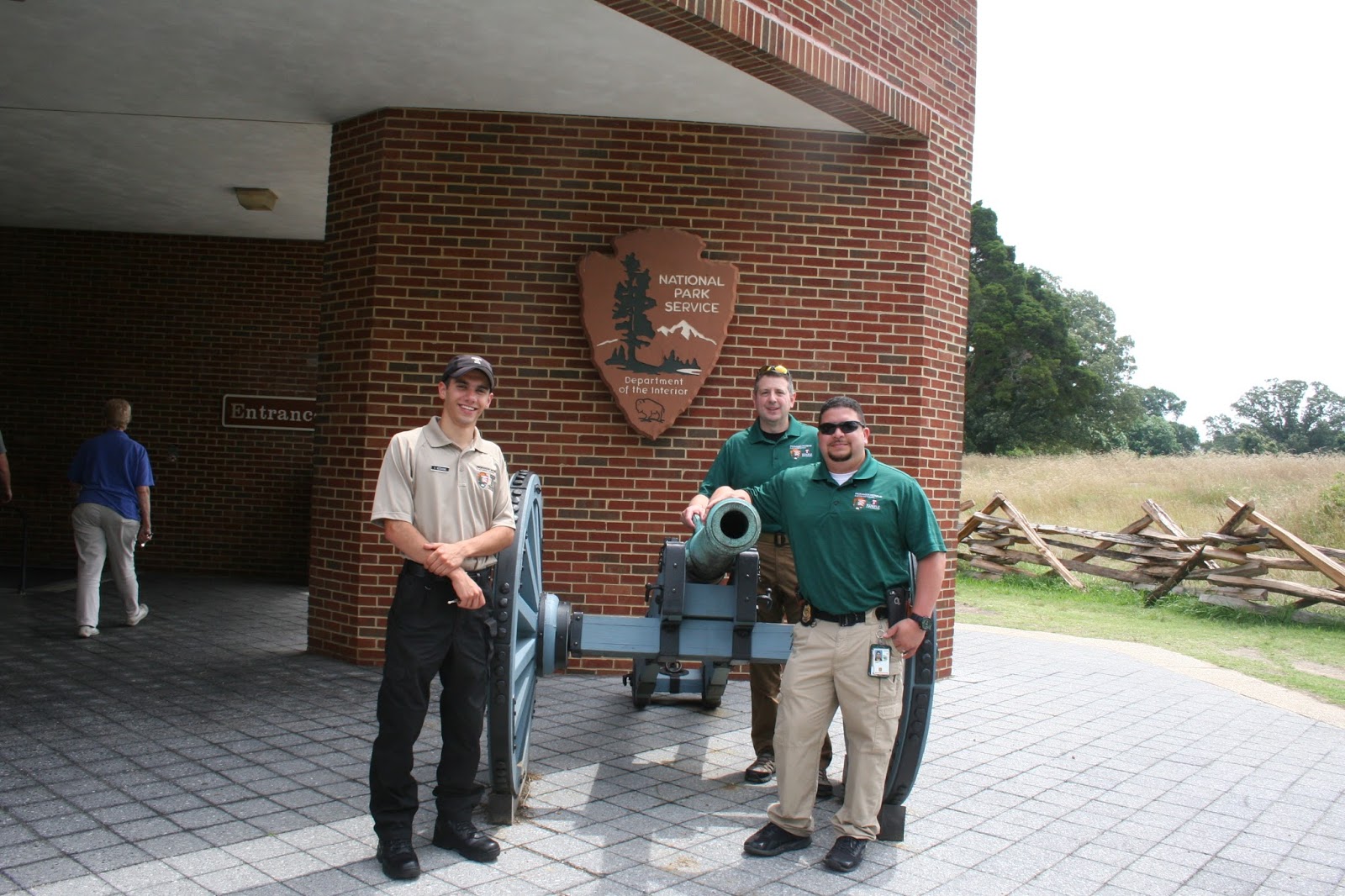
            The highlight of the night (from an experiential standpoint) was the DUI case that the rangers and I undertook that evening. I was able to witness and partake firsthand in the procedures that are involved in a DUI. We pulled over a gentleman and ran him through SFST’s (Standardized Field Sobriety Testing) and used a PBT (Preliminary Breath Test) to determine that he was unable to operate a motor vehicle. He was arrested, escorted to the corresponding jail, and ran through more testing to investigate his blood-alcohol level. He was issued the necessary citations, filled out the required paperwork, and was released to his mother per federal protocol. He will have a preliminary hearing this upcoming week.
            In addition to the number of law enforcement happenings throughout the days, I was able to work with folks in the Natural Resources division of the park. The most exciting day was on Thursday, when I put on some waders and boots and headed out into the swampy areas of the James River to record birdlife and plant-life in specific areas of the park, I learned so much, particularly about saltwater vs freshwater landscapes and how much of an effect that sea-level rise has had on this island of Jamestown. The more I work with different divisions, the more I understand about their importance to the park.


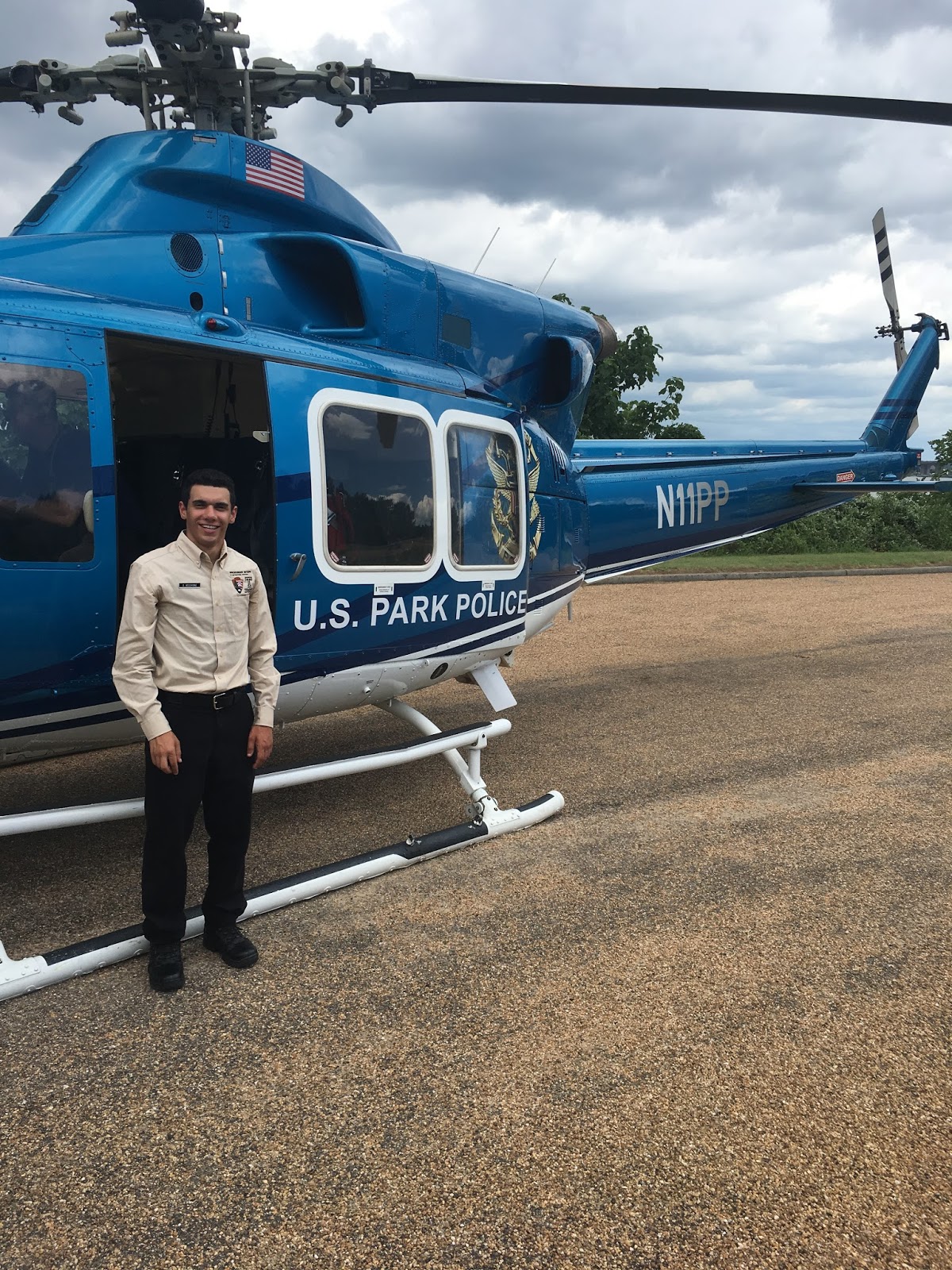
            The highlight of my week however, was yesterday, when I got to meet the Secretary of the Interior of the United States. Secretary Zinke flew into Colonial via helicopter and I was able to meet him and some members of Park Police. He gave an informative speech at the Visitor Center at Yorktown and participated in some cannon-fire demonstrations. He was such a down-to-Earth man and I was extremely honored to be able to describe the ProRanger Program to him. He was quite proud to see the younger generation getting involved and found it to be a great recruitment tool, as he is a big proponent of partnerships. Before he left the park, he gave me a challenge coin and reminded me to listen to my supervisor here at the park because I am in great hands. I told him I would try my best!