Showing posts with label Lake Mead NRA. Show all posts

Wednesday, August 4, 2021

Facilities and their management

On my first day of working with Facilities Management, I got to see the inspection process for the government housing to make sure that everything is up to code, specifically RM-36. For example, much of the housing was constructed back during the Mission 66 era. Many of the building practices of yesteryear were by and large abandoned for safety reasons, like using asbestos as insulation or lead-based paint, so it is important to check for any crucial areas of improvement. Filling me in on what needs to be done were the park carpenters Chuck Latrell and John Riffy, both of whom have worked in construction for a good amount of time. Before continuing with our day we stopped by fee station 705 to fix a door with a malfunctioned automated lock. Turned out a bolt just needed to be tightened. Later, I got to help out at the sign shop and built a few signposts for LAKE’s sister site Tule Springs Fossil Bed National Monument. Ending my day with workplace safety training such as learning the park’s emergency action plans and fire protection plan. 

Entrance station 705

For those who may not know, facilities management is in charge of maintaining park infrastructure in order to preserve the park’s mission. Not only that, but they also ensure that the area is safe, functional, and pleasing to many visitors who come to the recreation area. They face challenges ranging from staffing, deferred maintenance, and dealing with natural disasters. The three biggest projects that must be maintained are trails, toilets, and trash since they directly affect the public’s enjoyment of the resource and their safety. 


The next day I got to experience a full day of field maintenance with Rommel Garcia. Many of the tasks we completed reminded me of my old summer jobs as a landscaper and factory worker. This was especially evident when Garcia and I removed a fallen tree and all its branches from the parking lot near headquarters in Boulder City. We also cleaned up around the visitor center, replacing the toilet paper, replacing all the trash bags, and checking for leaks or cloggings. I was surprised to learn that there are over 170 toilets at the park that needed to be cleaned and maintained daily. That and the existence of float toilets which are like a little floating barge with a portapotty on them. Garcia enlightened me on how facilities work with VRP when it comes to incidents of graffiti, which has been occurring more lately, and how they report it to dispatch so they may send LEOs to take photos and report it. Finishing up the shift with quick cleanup of the Boulder Beach campgrounds.


The storm from the previous night knocked this tree over

My last day was a very informative one. I was given the rundown on the Project Management Incident System (PMIS). I was also informed that just because a park may have the funds to tackle projects, it is the size, budget, and staff that can affect what they can handle. This leads to a frequent update of where priorities need to lie or for them to be canceled due to overshooting the budget. Just hearing all the acronyms and red tape that goes along with facilities management made me understand the importance of this department. After a while, I then traveled around checking on the treatment systems at LAKE. Ensuring that there is not too much chlorine in the water. I wish I got a picture of it, but a snake jumped out at me at one of the stations. Luckily it was not a rattlesnake, but then again I thought it was just a pile of rope when I first saw it. That was until it started moving. Regardless, it was great to work with the men and women over at facilities management. There are all of these challenges they must face yet they still maintain the resolve to get them done. 


The sign shop near the dispatch center

Monday, August 2, 2021

East Meets West!

Last week I was honored with a visit from the ProRanger Program Staff!

A quick selfie at the entrance sign near Boulder City

I met up with Ranger Moe Greene and Dr. Vicki McGarvey in the middle of this blazing July. Over the course of three days, I got to show them the majesty of Lake Mead and all the resources it had to offer. Well, I did not get the chance to show them everything given the size of the recreation area, but still. One of the first activities we did here attended an informational training session at the Hoover Dam Spillway House on identifying the early signs of ASD, PST, and PTSD. The presentation was accompanied by real footage of officers reaching their breaking point, demonstrating professional restraint, and giving their testimonials of the importance of a support network to decompress from the pressure a career in law enforcement can bring. It was a sobering experience and a clear reminder that this is not a job just anyone can do. From there we spent the rest of the day in the canyon district, specifically Willow Beach, discussing the various VRP issues that go on within that area.


The training was joined by staff from NDOW, NPS, & BOR 

The next day we woke early morning to ride on Lake Mead’s iconic waters with Ranger Largent. Afterward was an integral part of the program, where the Temple Program staff got to meet with my supervisors to discuss my performance. It allows the program and park leadership to share feedback and give any suggestions to the program. I also had the honor of presenting a plague on behalf of the Temple University acknowledging LAKE as a 2021 partner to Chief Ranger Trouper Snow, who has worked with ProRangers in the past, like ProRanger alumnus Thomas Kidd. With that taking up a good portion of the day, we retired to reflect upon our meeting and prepare for the next day.

Group photo near the Hoover Dam from the Boulder Basin side

Presenting the program plague to Chief Ranger Snow & Ranger Peterson


On the final day, we were able to get a “secret tour” of Hoover Dam with the K-9 Ranger from the canyon district, Ranger Findley. Regaling the three of us with the colorful history of the dam and its construction, I was also able to inquire about the role he performs as a K-9 officer. Ranger Findley regularly patrols the dam with bomb dog Thor. You can’t have Lake Mead without the Hoover Dam, but you can’t have the Hoover Dam without the many brave men and women who work round the clock to protect it from possible threats. The Bureau of Reclamation's security forces handle overall security for the dam, but NPS rangers handle the law enforcement when needed. This was done back in 2017 with the closure of the Hoover Dam Police Department. Once the tour had finished, we had officially seen the Hoover Dam from all possible angles. 


Image for scale
The three of us near the base of the dam


Before finishing out the day, we all got lunch with my supervisor Ranger Peterson and ProRanger alumni Ranger Bussell. It was great to interact with someone who has already gone through the program and have everyone enjoy a meal together. Finishing out the day with a tour of Mead district, I informed Dr. McGarvey and Ranger Greene of the types of VRP issues that go on during the summer season. Only going as far as Redstone, I also stressed the difficulty of Rangers being able to patrol the entirety of the area due to its vastness. When they are not at the ranger station located by Boulder Beach a few rangers usually conduct their work at the auxiliary ranger station located at Callville Bay. In the summer there are frequent emergency medical calls and people requesting assistance due to heat-related complications. 

Ranger Bussell and Dr.McGarvey posing with the smokehouse pig

Ranger Greene and I traversing the rocks at Redstone

All and all, it was a great time! However, as the two left, I contemplated their words of advice to me and resolved to keep striving for improvement. I'd like to thank Dr. McGarvey and Ranger Greene for all their hard work and for allowing me to be a part of this program. I would also like to thank Chief Ranger Trouper Snow, Rangers Peterson and Orfe, and LAKE park staff for their hospitality to us. Their leadership, hospitality, and kindness helped to foster a positive environment for me to learn and grow. I hope that future students will be able to experience the same openness found here at LAKE. 

Tuesday, July 27, 2021

Plant, Animals, and Petroglyphs

 Hello again everyone,

When I worked with the Department of Resources, I got to leave my mark on the recreation area by giving back to the landscape. Starting the week with vegetation, I got the chance to assist over at the Song Dong Native Plant Nursery. Here they grow native plants for the National Park Service use and other agencies (BLM, USGS, NDOW, etc.), also for other restoration projects in the region. They are usually given a list of plants and seeds in the winter so they can prepare by fall. Kelly Wallace, the biologist, and manager of the plant nursery, also assist LE by assessing the damage caused by those who go off-roading. Overton and Cottonwood East being commonly affected by this issue in the winter. Still, I helped out by transplanting some plots of creosote, watering plants, and sowing a bunch of Willow Baccharis. 

The next day I rode down to Cottonwood cove to remove invasive plant species with the Exotic Plant Management Team (EPMT). This includes plants such as fountain grass, Tribulus Terrestris, palm trees, and salt cedar. The goal of weed management is not eradication but control. So, the fact that Mr. Dambrosi of the EPMT and I only found a single plant of Tribulus Terrestris meaning their weed control was going pretty smoothly. See, taking care of both natural and cultural resources is a critical function of resource management. These resources, whether they be buildings, artifacts, petroglyphs, plants, animals, or fossils help us tell stories and share meanings, creating increased opportunities for visitors to connect with their respective parks. 


A close up on the rogue Tribulus Terrestris

At first, I thought the weed was the bush, but no.

Assisting me with archeological resources was Ms. Peeples, a contractor of the Great Basin Institute, while Ranger Juliane taught me about her role studying Aquatic Invasive Species. In a way, they both try to get people to change their attitudes towards the environment since the public’s actions affect the inherent value of LAKE. Sadly, I can not really show any of the petroglyphs or other artifacts since ARPA protects the disclosures of cultural sites from those who are not qualified to handle/study the artifacts. At least I finally learned how to use a compass. In Nevada, you need at least fifteen artifacts to be considered a cultural site, when you have less it becomes a local resource. On a serious note, whenever there is damage to a cultural site LE lets resource management know of the extent of what damage is done. From there they determine the severity of the violation. After we conducted several condition assessments on petroglyphs, I ended the day by helping with the accessioning process by logging some key mineral stones into their collection. 


My last day was with wildlife management. I got the opportunity to help check up on the various water feeder stations throughout the recreation area. These feeders exist so that the bighorn sheep do not interact with the public. They also do not like being in flat land since it makes them vulnerable to their predators, like mountain lions. Hunting and trapping are permitted in designated areas of LAKE and are regulated by the state game agencies. Rangers and NDOW enforce game regulations and whenever there is an animal-related crime they contact wildlife management to access the damage. Similarly, the Wild Free-Roaming Horse and Burro Act of 1971 makes it a federal crime to harass or kill these "wild" animals, despite them both being invasive to LAKE. Still, it felt great to help out with resource management and give them a hand with their projects.

Endangered Relic Leopard Frog

Desert Big Horn sheep

Stay tuned for more ProRanger adventures as I talk about the program visit with the folks from out east!

Wednesday, July 14, 2021

Interpretation and the Stars

This past week I worked with the Interpretation Division. I spent a few days manning the information desk over at the Alan Bible Visitor Center, answering phone calls (the calls being questions pertaining to the Lake's water levels and launch ramps), and assisting visitors by telling them of many wonderful things they can do here in the summer. I also gave out programs and park maps to get visitors interested in seeing the park and attending ranger programs. Working at the information desk throughout the week was a wonderful way for me to learn as much as I could about the park since I needed to find out the answer to any and every question I was asked by visitors.

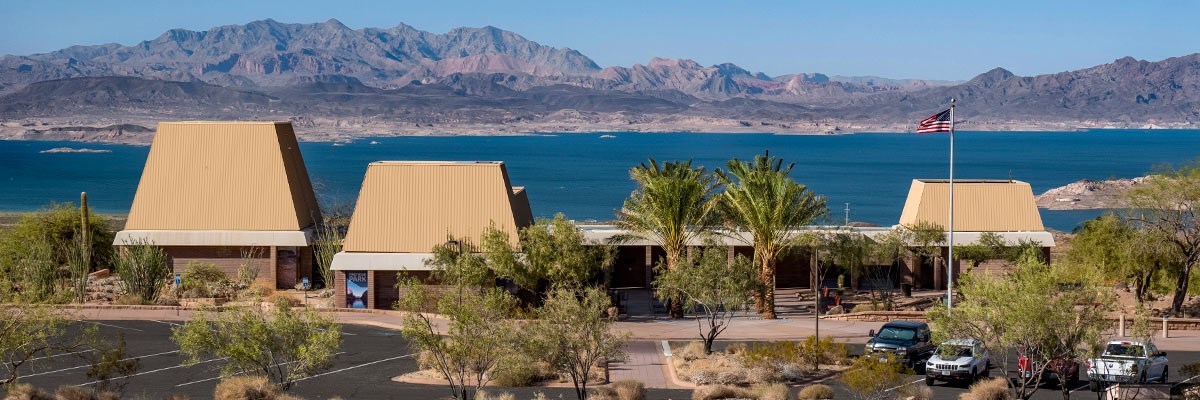
The Alan Bible Visitor Center overlooking Lake Mead

When I was not in the visitor center I roved the beaches of Cottonwood Cove, Boulder Beach, and Nelson's Landing to bring Interp. to them. Informing the public of the recreation area's rules and regulations, safety tips, and just striking up conversation alongside Interp. Ranger Kevin Garcia. The opportunity to meet with the public stressed the importance for NPS staff to be inclusive and accommodating to the various communities that make up the Nevada/Arizona Area. Specifically, Ranger Kevin and I are one of the few staff members who can speak Spanish when Nevada's population is 28% Hispanic and Arizona's is 31%, respectively. The probability of contacting someone who may not speak English as their native langue is relatively high, so being able to speak to those from different backgrounds is important. Not only because it is a useful skill, but because it highlights the NPS's core values of Excellence, Integrity, and Respect. Many of the people we spoke with, who were not native-English speakers, were often surprised if not thankful for being able to interact with staff who can actually understand them.

My experience with Interp. taught me a lot on how to interact with the public, outside of a VRP context, and learn much of the interpretive themes of LAKE itself. For those who do not know, interpretive themes are often described as the key stories or concepts that visitors should understand after visiting a park. The main theme here being survival due to everything and everyone relying on the life giving waters of Lake Mead to live out here in the desert. The landscape being a physical embodiment of the human spirit of resilience in a hostile environment and exerting dominion over the land to create something that stresses interdependence with nature, as well as a delicate tapestry of ecosystems that are deeply reliant on one another.

One of the last projects I assisted with before my week's end was helping with the STAR Party. The program is held to teach visitors about the stars, planets, and other celestial features. Despite some light pollution from Las Vegas, it is astonishingly easy to see a myriad of stars and their constellations. Before the event, we had to consider various things like possibly cancelling due to an excessive heat warning for the area. We ended up moving the event indoors and then bringing it outside near the end in order to allow visitors to see The Summer Triangle, which is an asterism. It’s made of three bright stars in three different constellations, the stars being Vega, Deneb and Altair.

Tim Denny explaining to visitors the significance of moon phases

Ranger Kevin Garcia manning the welcome desk for the STAR Party
The Summer Triangle

Interpretation Volunteer Elaine educating visitors by red light

Checking out the rocks at Redstone Dune
The night ended well, with excellent examples of interpretive talks from volunteer Elaine who gave a riveting tale of the Chinese legend "Night of the Sevens." The story involves two lovers, a weaver girl and the cowherder represented by Vega and Altair, who are tragically separated by an impenetrable and raging "River of the Sky." The next day we conducted an "After-Action" review to discuss areas of success, areas of improvement, and overall feedback for the one in charge of the program. Looking to host the next event at a more scenic environment, I was tasked with scouting out Redstone Dune Loop Trail as a possible site to host the next STAR Party. It was important to keep in mind the logistical necessities such as capacity, the number of benches, how many telescopes can fit there, what to equipment to bring, and the safety risks. Reflecting on my week, it has been an eventful few days full of knowledge. So, if you ever find yourself here at Lake Mead, be sure to stop by the Alan Bible Visitor Center to say hello to the Rangers and volunteers who will do their best to make your stay a great one.


Thursday, July 8, 2021

A Meeting of the Minds

 Hello everyone!

This week I was able to shadow the administration division, more specifically the acting superintendent of Lake Mead National Recreation Area. Allowing me to meet the Chief of Staff, the heads of Resource Management, Visitor and Resource Protection, Facilities, Commercial Services, and even the superintendent of Tule Springs. They allowed me to attend the leadership team meeting where they have a weekly assessment of what has been going on with the different divisions at LAKE. Discussing topics such as fire danger present here due to years of severe drought and extreme heat. Sadly, due to the sensitive nature of many of the meetings I cannot go into full detail about everything discussed. In a nutshell, it was a day full of extensive meetings, calculated discussions, and executive decisions.


One of the most significant being the meeting with the Colorado River Steering Committee. 

They are an interstate water administrative agency established by action of five state legislatures and Congress with the enactment of the 1948 Upper Colorado River Basin Compact. The Commission’s role is to ensure the appropriate allocation of water from the Colorado River to the Upper Division States of Wyoming, Colorado, Utah, and New Mexico and to ensure water is released in accordance with the 1922 Colorado River Compact to the Lower Division States of Nevada, Arizona, and California and to the Republic of Mexico. 


Superintendent Sarah Creachbaum at her desk


My meeting with Superintendent Sarah Creachbaum gave me some insight into the types of sacrifices and hard work required to be an effective leader. She was not afraid of telling me the types of difficulties that come with her position either. While the title of superintendent brings acclaim and accomplishment, it can be a sort of "thankless" position since they are the ones expected to make the tough calls. With an extensive career in the park service, Ms. Creachbaum got her exposure to major leadership roles with the park service through the Bevinetto Congressional Fellowship. It was a program designed to provide those selected the opportunity to see how Congress operates and works with legislative affairs. Whether it be parks such as Olympic, Grand Canyon, or Haleakala; however, she has to strive to what is best for the park with the federal budget provided. The most profound thing she told me was the idea that sometimes we should walk through the doors opened for us, even if it is not always the most perfect fit. Since it is those opportunities that oftentimes pave the way towards long-term success. I will definitely keep those words in mind as I continue to pursue a career with the NPS. Who knows, maybe one day if I keep working at it I can have my own desk too!


A sanctioned photo at Creachbaum's desk

Sunday, July 4, 2021

Conservation Project: PSAR

With my third week well behind me now, I should inform you guys of the project I have been working on while I have been out here at Lake Mead. My task has been to lay a foundation for implementing, and or improving, a PSAR Program here at LAKE. Also to educate concessions and the local communities as to the hazards associated with visiting LAKE, and maintaining the loaner life vest stations available at Boulder Beach.


One of the life vest stations I stock and maintain.
PSAR (Preventative Search and Rescue) is an essential component of ensuring the safety and enjoyment of visitors by providing crucial information on the hazards at a respective NPS unit/park. The point of a PSAR program is that it helps people avoid needing to be rescued whether they are out on a trail or on water because they have the necessary knowledge or resources to avoid and or handle the risk themselves. For example, these programs have been incorporated with positive results in other units, such as Grand Canyon National Park which is adjacent to LAKE. The program focuses on sharing important safety messages through the use of signs, Mead’s website, social media, and one-on-one contact with visitors. That way visitors are able to make better-informed decisions and can take proper precautions as they explore the recreation area. Bottom line: The goal is to save lives.

The graph details the number of search and rescues at Grand Canyon National Park from 1983 to 2014. Trends diverged after 1996, the year the park implemented the Preventive Search and Rescue Program.

However, this recreational area faces a variety of complex situations that other parks may not encounter. Due to a lack of proper staff, equipment, and the sheer size of the park, it can be difficult getting the necessary people to do some of the PSAR initiatives found elsewhere. This does not mean that steps have not been taken to ensure the safety of visitors here at LAKE. Many of the LE Rangers here are EMT trained, and there is always the patrol plane that goes and flies out to the remote & hard to reach areas of the park when a SAR is taking place. Plus, because the temperatures get so high during the summer, many of the more dangerous trails, White Rock and Gold Strike Hot Spring, are closed off for the season with road barriers and signage. The Historic Railroad Tunnel Trail is still open, but if you decide to go, aim for an early morning hike in order to avoid the rising temperatures. An example of PSAR found at this trail is the large thermometer, warning signs, and map kiosk that alert hikers of possible heat-related dangers to them and their pets. 


A big push for this initiative is the fact that many of the SARs that take place are avoidable. Extreme heat and drownings are the major cause of death here at the recreation area, so it is important to take some extra precautions to ensure your safety. Also, with the 4th of July right around the corner, the life vest stations need to be refilled and maintained. Recently, we received a donation of 335 life vests from the admins of the Las Vegas Fishing Club and Lake Mead Family Boaters Uncensored Facebook groups. This was done in honor of the 6-year-old Stacey Mock, who tragically drowned here this past May. According to NDOW, strong winds pushed the girl, who was on a pool float, away from the shore. Pool toys being something the park has worked to prohibit for some time due to the danger they can pose, especially with children. However, it was nice to see a community rally together to help make some necessary steps towards preventing this tragedy from happening to others.  


Children help deliver lifejackets to Deputy Chief Ranger Matt Stark, Ranger Peterson, Ranger Dunbar, and I over at Boulder Beach.


I will continue to work on my project, maintaining the loaner life vest stations, and doing what I can to help educate the public. Speaking of which, here are some safety tips on hiking during the summer here at Lake Mead. I plan is to consolidate this information and other water safety tips into an easy to have pamphlet or card that can be carried around by visitors and distributed to them by the staff here. The NPS's mission is to “preserve unimpaired the natural and cultural resources and values of the National Park System for the enjoyment, education, and inspiration of this and future generations.”


Therefore, you must do what you can stay to safe and hydrated! 


Until next time,


ProRanger Carlos

Tuesday, June 29, 2021

On Even Drier Land

Another week at Lake Mead National Recreation Area and another opportunity to learn about Visitor and Resource Protection. This week I was working with the Rangers over the Boulder District of Lake Mead. You may ask, what does Visitor and Resource Protection (VRP) entail? Well, thanks to the Organic Act, 16 U.S.C. 1, VRP staff essentially enforce all traffic, wildlife, and other laws that apply while within the park’s jurisdiction. Not only that, they provide emergency services to those in need as well, as many of the Law Enforcement Rangers here are EMT trained.


The second week was marked with all sorts of tasks the Law Enforcement Rangers have to perform while patrolling LAKE. I began my week with a patrol on the road towards Callville Bay where we spotted an abandoned water tanker. Initially we were alarmed as there was various debris and first-aid equipment strewn about the ground towards the front. We eventually called a tow company to recover the vehicle but we had to drain it of its water first. The likely case being that the vehicle was stolen and ditched once it ran out of fuel. 


The stolen water tanker being drained.


As the summer goes on the area is getting busier and busier on the weekdays and weekends. I have had several opportunities to play the essential role of what a backup officer may perform for another officer when addressing a contact in a safe situation. I am on the lookout for any weapons that may be used to harm an officer or myself, and I continue to communicate with the initial officer if I see anything. Should anything go wrong, I have a coordinated plan to either retreat to a safe area or call dispatch for assistance. However, those opportunities to perform as a sort of backup officer has made me more comfortable addressing someone during a traffic stop. 


One of the patrol boats located at Hemenway Harbor

I later had the opportunity to ride in one of the patrol boats to rescue man who was stranded on Fishfinder Cove due to his jet ski's engine malfunctioning. Since the park service cannot interfere with commercial operations that can be performed by a local business they cannot tow vehicles, they can only rescue the people not property. So, LAKE has a rotation of tow companies that are contacted for such situations involving vehicle retrieval. So, as I continue my internship here at Lake Mead National Recreation Area I will continue to experience more law enforcement contacts and situations that occur, whether it be on land or water. Allowing me to further my training with the National Park Service, and foster a deeper understanding of how the area operates.


Thursday, June 17, 2021

Meeting Mead

Hiking during my free time

Hello again, everyone! In the time that has passed, I learned that I was having my internship over at Lake Mead National Recreation Area and made the transition over to LAKE from Pennsylvania. On Friday June 4th my five hour flight landed and I quickly became acquainted with Ranger Nick Peterson and the park housing I would be staying at for the summer. I spent most of my first week at the recreation area getting familiar with the layout of the place, by land and air, and learning from Mead District Ranger Michael Garel about what I can expect to see over here in the Mead District. Unfortunately, due to the extreme heat of the summer, I won't be able to explore many of the trails around the area during my downtime since they are closed, such as Gold Strike trail, White Rock, and pretty much all of the trails on the Arizona side of the area. This extreme heat also leads to frequent SARs in those trails, despite them being closed. Still, there are plenty of beautiful sites along and on the water for everyone to enjoy.


Lake Mead’s headquarters in Boulder City

Being over in the West Coast is a new experience for me, so this summer is going to be filled with firsts. One of those being the opportunity to go on patrol with Pilot Ranger Scott Taylor in the skies over Lake Mead. Due to the vastness of the area, this allows the National Park Service to survey and respond to emergency calls out in the more remote areas or hard to reach waters. It also performs searches, locates wildfires, and alerts others of where visitors are congregating the most. According to Ranger Taylor, we can reach just about any part of the Recreation Area in about half an hour or less. He also taught me much about various cultural and ecological sites that are significant to the various Native American tribes that roamed the region.


Posing with the Park Service’s Cessna 206 over at Boulder City Municipal Airport


Picture of Hemenway Harbor I took from the plane

Overall, it has been a very exciting first week at Lake Mead. Along with the aerial tour, I was on a ride along with Ranger Michaela Morris who works over at the Canyon District. She informed me about the jurisdiction found on the Hoover Dam, which once had its own police department, and how the National Park Service took over the law enforcement duties for them. Although the Nevada checkpoint is run by the Bureau of Reclamation security. She also told me about the common law enforcement issues found over at Willow Beach, such as fights over picnic space and public intoxication. Farthest south I’ve made it so far is to Bonelli’s Landing which was filled with cows and burros!

Curious donkey stares back as it and other burros hang around Bonelli Bay

Remnants of the old school at St. Thomas Point
The day after I took a long drive up north to visit Echo Bay, where I assisted a group of visitors free their mud stuck vehicle with the help of SNORR, a volunteer off-road recovery group. Afterwards I made stops at Blue Point Spring, Stewarts Point, and St. Thomas Point. Interestingly, Stewarts Point is home to about twenty-five residents that pay about two-hundred dollars to lease the land. Some residents have resided in the area since the 1950’s. St. Thomas Point, on the other hand, is a ghost town that was once a Mormon settlement. The small town thrived as when it was once a stopping point between LA and Salt Lake city, but the locals were forced to relocate due to the construction of the Hoover Dam. Specifically because of a rise in water levels caused by the dam. Eventually the once submerged town became visible again and is now a two mile trail loop that can be enjoyed by visitors. Overall, it's been an amazing experience filled with new sights and sounds that’s made me excited to learn more about the area in the next few weeks. Aside from getting used to the extreme heat, there is a lot I have to learn about surviving at Lake Mead. 


Until next time,

ProRanger Carlos


Monday, July 20, 2020

East of Mead


Welcome back, loyal blog fans! I concluded my last blog post with “Coming soon to a park near you”. Unfortunately, that statement did not come true due to the COVID-19 pandemic. I have since arrived at a park near me. As the world changed around us, I remained optimistic about the situation despite the grim circumstances. My Westward travel became impossible and I was reassigned to Gateway National Recreation Area in my home state of New Jersey. Specifically, the unit known as “Sandy Hook”. The rangers at Sandy Hook have referred to it as “The Far East Division of Lake Mead”.
Gateway N.R.A.-Sandy Hook Unit Entrance Sign
COVID-19 Social Distancing Sign
My supervisor and ProRanger alumni, Ranger Lyle, gave me a tour of the park during my first week. Program Manager Greene has also spent time here! Throughout the day I was introduced to supervisors, seasonal rangers, traffic control, and fee collection rangers. I was impressed by how kind and welcoming each ranger was. Scattered throughout the park are retired missiles, anti-aircraft guns, and the concrete structures which housed them. When I visited as a child, I thought they were simply the coolest things I had ever seen. Now returning as an adult and N.P.S. intern, I have come to understand the major role Sandy Hook played in defending the East Coast. From 1874 to 1919 the Army used Sandy Hook as a proving ground to test new weaponry. For this reason, ordnances have been found on the beach. As technology developed, Nike Missiles were housed here from 1954 to 1974. Supervisory Rangers Lyle and Miller showed me where the missiles were stored, fueled, and assembled. They also explained the layout of Fort Hancock.
Retired Nike Missile along Hartshorne Drive

Continuing with things that were new to me, some of the park has changed post Superstorm Sandy.  Sandy occurred in 2012 and caused catastrophic damage to New Jersey. Looking closely at the picture attached you can see the water line on a booth in front of the old ranger station.  Sandy Hook has water on both sides of the park however the pictured booth is pretty far inland. Since the storm, the Ranger Station, Welcome Center, and other buildings have been moved elsewhere.
Superstorm Sandy water line
Early on, we spent time at fee collection as a park closure was anticipated, which has been common, due to full capacity. That day was a very busy day to say the least. The number of spots remaining in the parking lots are continuously counted. There is one bridge that leads directly into the park.  Traffic frequently backs up well beyond the bridge into the neighboring towns. This has brought up opportunities to discuss jurisdiction and neighboring agencies. Fortunately, so far, when we have reached mid-day, some visitors leave, and the park has been able to remain open to accepting incoming visitors.   I have also patrolled with Ranger Patrick. Ranger Patrick welcomed me to the park with a patrol of Gunnison Beach on foot. Gunnison Beach is a clothing optional beach, the only one remaining in the state. That experience is not one I had anticipated when joining the ProRanger program. Within the first few days I had learned about common violations without even needing to ask. This is a heavy law enforcement park and the rangers here recommend starting at a park like Sandy Hook to develop your skills. Ranger Fernandez has always reminded us that law enforcement is first and foremost in this career. Attached you can see the holding cells at Sandy Hook.  In this area I observed rangers as they processed evidence from an earlier arrest.
Holding cells at the ranger station

Here is a warning sign that will one day alert visitors to the nude beach ahead. This area is not optimal for blog pictures.
 
 In the time I have already spent here, I have been fortunate enough to have discussed the ProRanger program with some of the seasonal law enforcement rangers. We have been told before that not everyone is a fan of the program. Fortunately, each of them has treated me well. We have had an open dialogue about the pros and cons of the ProRanger program versus the seasonal route. I feel it is very important to respect their hard work and to remain aware of the opportunity I have. On one of my recent days off I came in to develop a better understanding of the roadways in the park and road my bike throughout the park.
I believe I can speak for the entire cohort in saying that the past few months have been tense, to say the least. Having the opportunity to complete my internship, despite a pandemic, at Gateway N.R.A. is one that I am very grateful for. 


Tuesday, March 17, 2020

Flat Hat Goals

Hello everyone,
My name is Daniel Boyce, and I welcome you to my first ProRanger Blog post. I am currently a senior and a Criminal Justice major at Temple University. I`m also a member of ProRanger Cohort 7. You might find yourself asking, “How does someone interested in being a National Park Ranger end up going to school in the city?” Don’t worry, I was asking myself the same question. Allow me to elaborate. I credit my interest in emergency services to being surrounded by police, fire, and E.M.S. as a child thanks to my family`s business; like many young boys I wanted to be a fireman. My innocent love for the outdoors turned to outdoor stewardship as a Boy Scout who went on to earn the rank of Eagle Scout. My career goals fluctuated through high school, but I was settling between the state park police or county park ranger. I had yet to have a job working indoors at the time, and I wanted to keep it that way. Upon researching such opportunities, I stumbled upon the ProRanger program. I saw the Law Enforcement rangers for the National Park Service were responsible for carrying out law enforcement, firefighting, and emergency medical services roles. In that instant I suddenly had a new found interest in going to school in the city. Fast forward through earning my Associates Degree in Criminal Justice at my local community college, I finally transferred to Temple University in the fall of 2018. Patience and perseverance paid off, and I was accepted into Cohort 7 in November of 2018.


Rappelling at Leadership Camp in New River Gorge. Photo Credits to Dr. McGarvey
During the week you will likely find me spending early mornings at one of our P.T. sessions and late nights at the Tech Center completing homework. Adjusting to city life, especially as a transfer student, was hard so I really value the friendships I have developed with, and because of, my fellow ProRangers. We only meet about once a month for weekend activities, but we rarely go 24 hours without seeing each other. On campus I am also a member of Temple`s Adventure Bound club. We are a group of like-minded students who enjoy going on what are typically day long outdoor expeditions. I was shocked to find out the founders went to the same community college I did and had started the club there. I pick up work whenever I`m called upon for my family business, and I work seasonally on a few farms and a scout camp during the summer. Working outdoors has definitely inspired me to stay out of a cubicle. In the scout camp I primarily served as the Assistant Ranger which performs maintenance duties. I look forward to time spent with maintenance during my internship. During the most recent fall semester I earned my Emergency Medical Technician certification after wanting to do so for years. Knowing the need for such a certification to go out West was my inspiration. As of lately you will find me on a Friday night or weekend day serving as a volunteer E.M.T. in my neighboring township. Having a certification on paper is one thing but I seek to gain some patient care experience before carrying out such duties in a park for the first time. I am a few shifts in with zero patient contacts so far, but perhaps that’s a good thing? I am told that is anything but ordinary.
A view from the Neversink Loop trail during my most recent hike with the Adventure Bound club.

Performing preventative maintenance on a tractor at work.

My experiences and interactions thus far with the National Park Service have primarily been through weekend activities and the law enforcement division at Independence National Historical Park. I am happy to say that the N.P.S. employees who the cohort and I have been fortunate enough to interact with treat us very well. It is a small world, and we have already learned that the V.R.P. world is even smaller. I have spent many days at the site closest to my home, Gateway National Recreation Area. Years ago I visited a few parks in the western United States including the Grand Canyon, Mesa Verde, and Petrified Forest. At this time I hope to end up permanently somewhere that will afford me the opportunity to carry out fire and E.M.S. roles. I do look forward to details and field training that might take me elsewhere to learn the varying functions and duties on National Park rangers. The opportunity to be placed into a ProRanger internship is one that I value greatly. Some ranger I have encountered have expressed their desire to have taken this route. Each of my fellow ProRangers standing alongside me in the cohort have outstanding strengths. It cannot be taken for granted that we surpassed the many that stood amongst us as applicants at Preview day. This summer I hope to be a “sponge” as we have repeatedly been told to be; soak up all the information and develop professional connections. Every ranger has their own way of carrying out their duties so I expect to learn different techniques and perspectives. I personally think about the challenges rangers face in knowing their park when they can change parks so quickly. Knowing your response area and who you interact with is vital in law enforcement. This is another area I hope to understand more through my internship.

 
Until that time, I bid you farewell. Coming soon to a park near you,
Daniel Boyce
ProRanger-Cohort 7