Showing posts with label Ozark NSR. Show all posts

Wednesday, April 12, 2017

Program Visit: OZAR


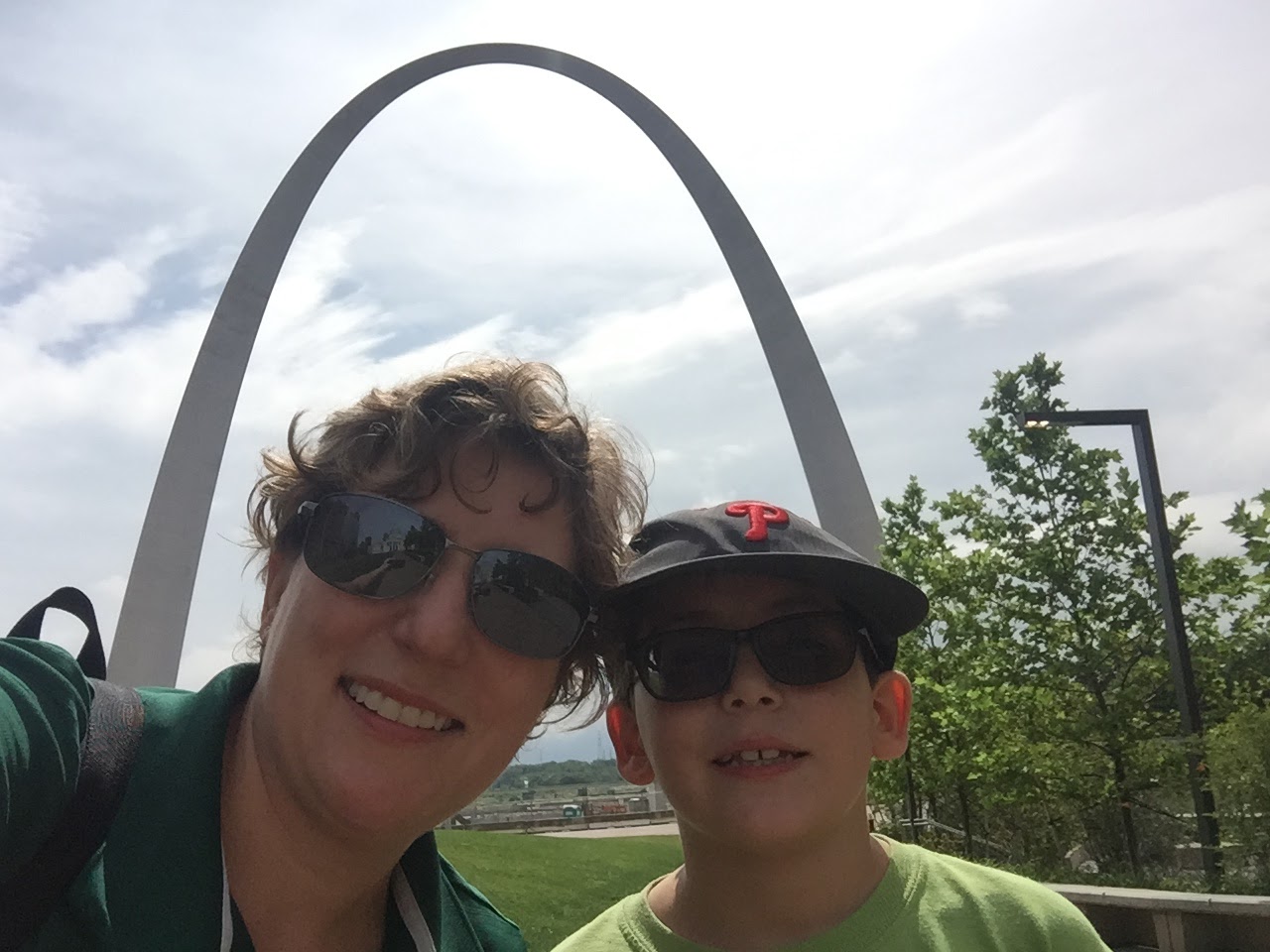
The visit to Ozark Scenic Riverways began with a flight to St. Louis where we stopped to visit the Jefferson Expansion Memorial.  It was great to see alumnus Dan Sweeney and to get some feedback on the changes we’ve made to the program.  Then Junior (Pro)Ranger Finn and I went up the Arch and completed the junior ranger programs at both the Arch and the Old Courthouse.  We learned from some of the rangers that there was another local park, Ulysses S. Grant National Historic Site, located on our way out of town.  We stopped by there and toured the home and farm of Ulysses S. Grant and earned a third junior ranger badge before (a late) lunch.  Score!!

Ranger Sweeney and Junior Ranger McGarvey

McGarveys and the Arch

Swearing in.

We arrived in Van Buren, MO late in the afternoon and met ProRanger Julia for a visit to one of the park’s many springs, and quick tour of the park’s cabins that were built the Civilian Conservation Corps.  They looked beautiful but are unfortunately closed for restoration.  Next visit!

The next morning Julia and Emily, one of the other rangers, picked us for a canoe tour of the Current River.  

Ready to tour the park by canoe

Although we could see the concessionaire’s huge inventory of tubes, rafts and shuttle vans, it was hard to believe this peaceful and quiet river (on a Tuesday morning) is a crazy party scene on the weekends.  We only saw one other boat the whole morning.  Julia described the patrols she’d done on the river and many of the interesting cases that she’d had the opportunity participate in this summer.

Chief Weiland, ProRanger Julia, Superintendent Johnson

Then we headed back to headquarters to present the plaque to Superintendent Larry Johnson and Chief Ranger Dennis Weiland.


Entering Round Spring Cave

After lunch, we headed to the Upper Current District to tour the Round Spring Cave. Unfortunately this is the only open cave in the park due to White Nose Syndrome which is affecting the bat population. The inside of the cave is about 58 degrees year around, which was a welcome respite from the heat index of over 100 degrees outside!  We finished the evening with a visit to a Van Buren institution, The Jolly Cone, for a cold treat!


Disinfecting shoes to prevent the spread of White Noise Syndrome


Bob the cat and Finn the junior ranger


On our final morning, we headed to the Visitor Center to finish the junior ranger program and earn another badge!  Finn was asked to pose for the OZAR Facebook page!  


Another day, another badge


Then we stopped by the Fire Cache while we waited to see if the storm was going to pass.  While we were there, we tested out some equipment.  

Testing the equipment

The rain stopped so we paid a visit to Alley Mill where we got to check out the old flour mill’s working equipment.  Maintenance was removing a damaged tree nearby so we didn’t get to see the turbine in action.  


Grinding by hand
Finally, we took a picnic lunch to a popular family swimming spot that Julia had learned about while patrolling.  Finn enjoyed swimming and climbing on the rocks while Julia and I sweated in the hot, hot sun.


We said goodbye to Julia and hit the road for Buffalo National River a few hours away in Arkansas.

Up next:  BUFF

Thursday, August 4, 2016

A history of recreation - OZAR


      One of the most popular uses of Ozark National Scenic Riverways is the river. Today, visitors from all across the Midwest come to the Riverways, drawn to its clear, spring fed waters. The management of the Current and Jacks Fork Rivers as federal lands has allowed them to be accessible to visitors from many different backgrounds and socioeconomic statuses. And logistically, floaters rely on the number of concessionaires in the park to rent canoes, kayaks, and tubes to float on.


Photos courtesy of the National Park Service
      But before the delegation of the Riverways, floating the current river was a much more of an elite ordeal. When the park was a state park in the late 1920s, concessionaires started to emerge to offer guided floating trips. Walter Bales began to offer "deluxe float trips," a service provided out of his store in Eminence, MO. Soon, he expanded his business into Bales Boating and Mercantile Company, which targeted an elite market of wealthy businessmen and politicians. Bales's fleet consisted of twelve johnboats, a store of camping gear, and a crew of river guides to conduct these trips. When a trip went on the river, a mercantile boat floated ahead of the guests, stopping at the floaters end point for the day to set up camp, which included beds and cots and prepare meals before the floaters made it down river. 


      After Bales operation, a number of concessionaires followed. And today, concessionaires offer the simple luxury of a vessel and a shuttle, and for many visitors, it is all the extra luxury that their day on the river needs.


Friday, July 22, 2016

ProRanger Guide to ID highly sought after roots in the Ozarks


Black Cohosh
Black Cohosh
In light of a recent investigation of root poachers in Ozark National Scenic Riverways, which resulted in citations being issued for 36 CFR 2.1 (a)(1)(ii) Possession of plant parts and the recovery of many roots-- including mayapple root, ginseng, goldenseal, and black cohosh-- I asked for a lesson in identification of some of these species.

I had the opportunity to go in the field with Ranger Pat Jackson, who gave me a crash course in much more than just those plants most often poached-- but also wildflowers, trees, and other Missouri native species as well as their specific ecological roles. I look up to his knowledge about the park's natural resources, and hope to hone my role as a naturalist as he has.

Some of the plants that we were able to identify on our patrol were black cohosh, goldenseal, as well as a list of native trees and wildflowers too long to list here.

Black cohosh can be identified by its tall flowering stalk with very specific white bulbed flowers, with compound leaves with three, jagged-edged leaflets.  Black cohosh root was originally used in Native American medicine to treat many different symptoms, including those associated with menopause and menstrual cramps.
Goldenseal

Goldenseal can be identified as a short plant with one stem that often (but not always, sometimes its just a single leaf) breaks off into two leaves-- one larger and one smaller, which grow in patches. Also, these can be identified by a small berry that is similar to a raspberry which forms in early June. Goldenseal root has many respiratory and digestive uses-- including to treat the common cold, hay fever, and general stomach upset.

My last goal before I leave the Ozarks are to identify ginseng, and although it is more work to find (its habitat is thick, wet slopes), it also is highly sought after by poachers, due to the fact that its sale value is very high.


Wednesday, July 13, 2016

OZAR - 'The Green Men in the Trees'

As the weeks fly by at Ozark National Scenic Riverways, some of the busiest weekends have come and gone.

In my third week at Ozark, I had the opportunity to ride in all three districts. I started the week with a cave tour of the Round Spring Cave, the only cave in the park that is open to visitors, and is beautifully decorated with large formations that truly take the visitors breath away at the sheer power and beauty of waters power to erode and displace. Also, with the heat index especially high, visitors and myself enjoyed its stable temperature, at a pleasant 65 degrees. I was able to discuss extrication techniques in the cave with some of my fellow rangers, of both medical patients and prisoners. Over the weekend, I surveyed the Jacks Fork, where I helped Rangers to set up a visibility blind to watch visually for violations that happen on a gravel bar downstream from the popular launch site, the Alley Spring campground. We were able to observe violations such as minor in possession, as well as the assimilation of state law, the use of a beer bong on a Missouri river.

In my fifth week, the park was experiencing especially high visitation, as the weekend before the Fourth of July is often one of the busiest. After riding in the Upper Current, where some of the more stringent fishing regulations are enforced to allow for sportsmanship for more experienced fisherman, I helped to survey the river on the Jacks Fork. Myself and Ranger Chris Figge and Law Enforcement Specialist Jodi Towery surveyed the river on the Jacks Fork, and issued over 15 tickets, of which were primarily for minor in possession.

Thursday, June 16, 2016

SARs, MIPs, and Bears, Oh My! - OZAR Week 2


Week two at Ozark National Scenic Riverways, and the water levels have dropped to below flood levels once again. Visitation has become heavy, and I began my week with river search and rescue training on the Upper Current River. My main goal was to get familiarity with waypoints along the river, so as to match them up to launch points that may be accessed by road (along with getting more stick time on the motorboats, of course).

After being out on the river, I spent time doing daytime patrols of the Jacks Fork District, where Ranger Kent Breese and I were called to a search and rescue for two adult males that had capsized their canoe, one of which had Lou Gehrig's disease. As we hiked up and down the hills to locate the two men, we were made aware that the one patient's condition had left him unable to speak. While brainstorming methods to communicate with a non-verbal patient (white board and marker, asking the patient to squeeze my finger once or twice), the two men were reported to have returned to the concessionaire's canoe shop.

I had the opportunity to spend my first night shift riding along with Ranger Daniel Newberry, a graduate of Temple University's own SLETP. While patrolling the Rocky Falls area, we had a few surprises. Firstly, we had a visit from a Missouri black bear, which I later understood-- largely from Ranger Newberry's reaction-- are very rare in the area. After the excitement of our wildlife sighting wore off, we road up to a vehicle of teenagers that had pulled over on the side of the road as our vehicle approached. As Ranger Newberry got out of his vehicle to check if the passengers were alright, he noticed the smell of alcohol from the vehicle. After checking the ages of the driver and passengers in the vehicle, he decided to administer Field Sobriety Tests on the driver, which he later arrested and cited under assimilated state code, zero tolerance for consuming alcohol and operating a motor vehicle.

Over the weekend, I conducted river-side surveillance alongside Ranger Breese to monitor for possession of glass on the river and other violations. After noticing a group consuming alcohol who appeared to be under the age of twenty-one, Ranger Breese pulled this group over to the side of the gravel bar, where he separated the group into individuals of legal and drinking age and those under who we had both observed consuming alcoholic beverages, and issued several citations for Minor in Possession of Alcohol.

This upcoming week, a heat advisory has been issued, so I'll be thinking cool thoughts.
Stay safe-- until next week!


Tuesday, June 7, 2016

Bring on the water - OZAR week 1

I have arrived at my second internship at Ozark National Scenic Riverways, and my first week has been full of adjustment and surprise.

OZAR is a large park, and getting my bearings has been a challenge. It is of utmost importance to understand ones jurisdiction and to become familiar with the layout of ones park, beyond the areas with the highest visitation or where a Ranger works the most, as a United States Park Ranger can be dispatched to anywhere within her or his jurisdiction. Understanding the lay of the land is important to truly maintain situational awareness and prepare for future incidents.
I hope to develop my familiarity district by district in the upcoming weeks.


I spent my first few days at Headquarters, combing through the Superintendent’s Compendium, Memorandums of Understanding with the County Sheriffs’ Offices and cooperating agencies, Fatality reports from past years, and some recent Incident Reports. These documents are important for me to review in my internship, because they allow me to understand the ins-and-outs of park rules, how the park cooperates with partners, and the importance of good report writing. Chief Ranger Dennis Weiland helped me to understand what goes into a good report, because no matter what kind of incident, a case is only as good as its documentation. I had the pleasure of shadowing Law Enforcement Specialist Jodi Towery, who introduced me to the new protocol in documenting evidence, showing me how evidence is moved from the field into storage.
I also had the opportunity to sit in on the monthly safety meeting. Accident and disease prevention starts with NPS employees, for no public servant can be of any assistance to visitors if she or he does not uphold their own health and safety as priority.

By the weekend, I was very excited to begin working in the field. I had the opportunity to shadow Supervisory Ranger Chris Figge at the Alley Spring Ranger Station in the Jacks Fork district. These first few days reminded me of how important it is to be prepared for anything. On Saturday, the rain was pouring, and I accompanied Ranger Figge on boat patrol to pull the remaining floaters off the water as the Jacks Fork River reached flash flood levels. Just the next day, Ranger Figge and I again set out on boat patrol, but this time it was a sunny hot day. We surveyed the river for debris that would need to be removed from the river to ensure floater safety. Ranger Figge even gave me my first introduction to operating a motorized boat. Needless to say, both my rain jacket and a bottle of sunscreen will remain in my backpack for the rest of the summer.

Until next week!

Monday, February 22, 2016

2016 Participating Parks Announced!

The ProRanger Program is pleased to welcome Cohort 5 to the program.  We are also pleased to announce the participating parks for Summer 2016!

Cohort 5
Angelo Algeri
Nicholas Gosik
Stephanie Hudson
Seth Jaworski
Taylor Johnson
Shauni Kerkhoff
Brennan McAuley
Justen Williams

New Parks to the ProRanger Program
Big Cypress National Preserve
Buffalo National River
Christiansted National Historic Site
Cumberland Island National Seashore
Ozark National Scenic River
San Juan National Historic Site
Santa Monica Mountains National Recreation Area
Virgin Islands National Park

Returning Partner Parks
Antietam National Battlefield
Boston National Historical Park
Colonial National Historical Park
Fire Island National Seashore
Gettysburg National Military Park
Independence National Historical Park
Shenandoah National Park
Manassas National Battlefield Park
Sleeping Bear Dunes National Lakeshore
Valley Forge National Historical Park
Yosemite National Park

Check back soon for updates from our new ProRangers and announcements about Summer 2016 park assignments.